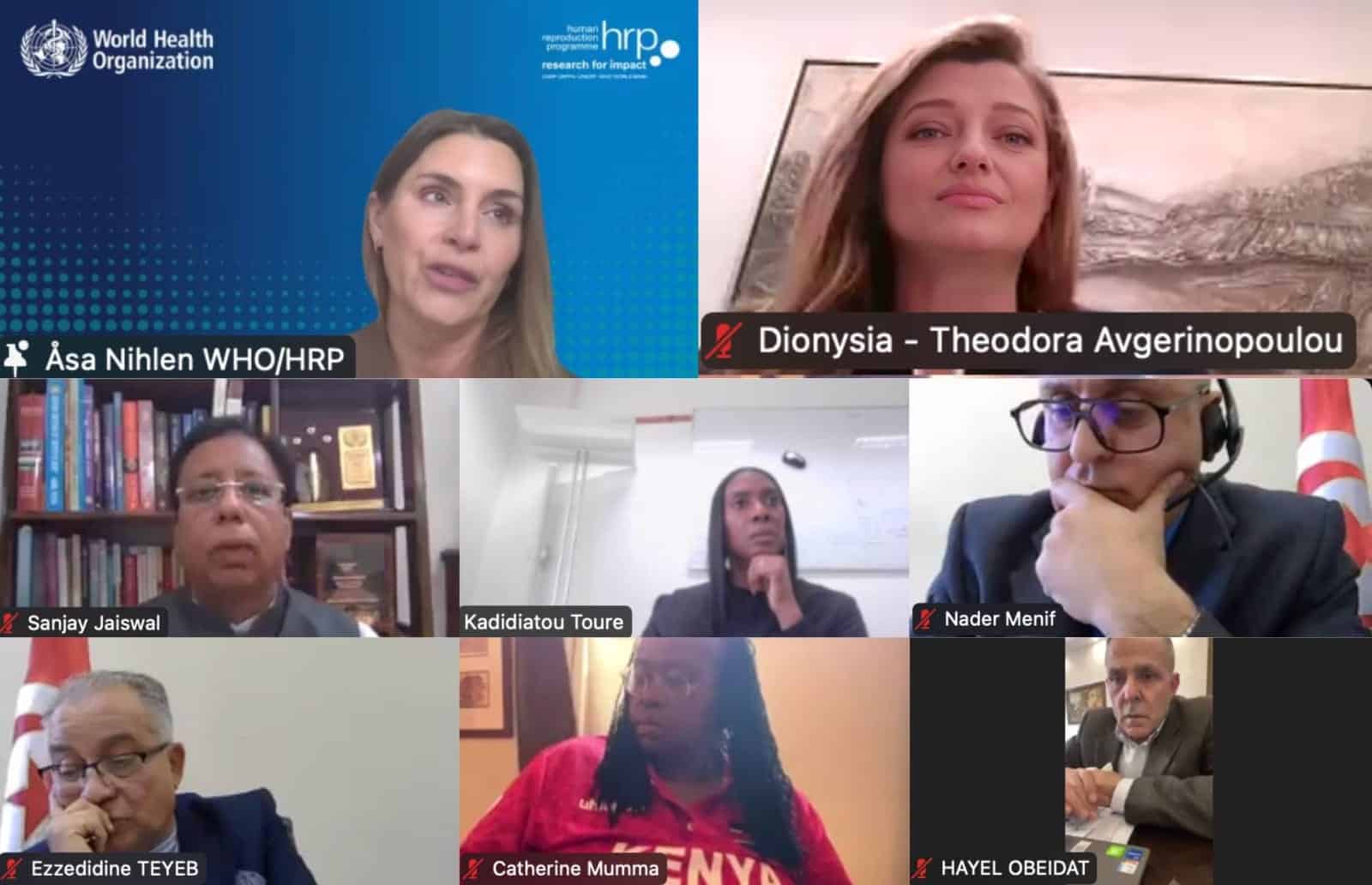
Dr. Dionysia Theodora Avgerinopoulou had the opportunity to participate in the IPU-organized webinar “Navigating health misinformation in the age of AI”, which focused on the impact of misinformation on access to health services, especially for women, children, and adolescents, and the role of AI in both exacerbating and countering these challenges, where she highlighted:
“As artificial intelligence rapidly transforms our societies, we are also witnessing an unprecedented acceleration of health-related misinformation—misinformation that can undermine public trust, weaken health systems, and ultimately put human health and lives at risk. In this evolving landscape, parliaments have a fundamental responsibility: to safeguard the right of our citizens to accurate, science-based information, while ensuring that technological innovation serves the public good. This requires strong legislative frameworks, robust oversight mechanisms, and close cooperation with the scientific community, civil society, and international organizations. AI itself can be a double-edged sword. On the one hand, it can amplify false narratives at an extraordinary scale. On the other, when developed responsibly, it offers powerful tools to improve public health communication, equity in health, detect harmful content, support medical research, and strengthen early-warning systems. The announcement by the WHO regarding a new upcoming instrument: the ChatHRP, that will offer credible information based on WHO sources, is very important.”
Congratulations to the IPU on organizing this very interesting webinar, so that AI may be used to benefit our societies!

Leave A Comment